Europe Population Pyramid 2015
Europe
Afghanistan
Africa
Albania
Algeria
Angola
Antigua and Barbuda
Argentina
Armenia
Aruba
Asia
Australia
Australia/New Zealand
Austria
Azerbaijan
Bahamas
Bahrain
Bangladesh
Barbados
Belarus
Belgium
Belize
Benin
Bhutan
Bolivia (Plurinational State of)
Bosnia and Herzegovina
Botswana
Brazil
Brunei Darussalam
Bulgaria
Burkina Faso
Burundi
Cabo Verde
Cambodia
Cameroon
Canada
Caribbean
Central African Republic
Central America
Central Asia
Chad
Channel Islands
Chile
China
China, Hong Kong SAR
China, Macao SAR
Colombia
Comoros
Congo
Costa Rica
Croatia
Cuba
Curaçao
Cyprus
Czech Republic
Côte d'Ivoire
Dem. People's Republic of Korea
Democratic Republic of the Congo
Denmark
Djibouti
Dominican Republic
Eastern Africa
Eastern Asia
Eastern Europe
Ecuador
Egypt
El Salvador
Equatorial Guinea
Eritrea
Estonia
Ethiopia
Europe
Fiji
Finland
France
French Guiana
French Polynesia
Gabon
Gambia
Georgia
Germany
Ghana
Greece
Grenada
Guadeloupe
Guam
Guatemala
Guinea
Guinea-Bissau
Guyana
Haiti
Honduras
Hungary
Iceland
India
Indonesia
Iran (Islamic Republic of)
Iraq
Ireland
Israel
Italy
Jamaica
Japan
Jordan
Kazakhstan
Kenya
Kiribati
Kuwait
Kyrgyzstan
Lao People's Democratic Republic
Latin America and the Caribbean
Latvia
Least developed countries
Lebanon
Lesotho
Less developed regions
Less developed regions, excluding China
Less developed regions, excluding least developed countries
Liberia
Libya
Lithuania
Luxembourg
Madagascar
Malawi
Malaysia
Maldives
Mali
Malta
Martinique
Mauritania
Mauritius
Mayotte
Melanesia
Mexico
Micronesia
Micronesia (Fed. States of)
Middle Africa
Mongolia
Montenegro
More developed regions
Morocco
Mozambique
Myanmar
Namibia
Nepal
Netherlands
New Caledonia
New Zealand
Nicaragua
Niger
Nigeria
Northern Africa
Northern America
Northern Europe
Norway
Oceania
Oman
Other non-specified areas
Pakistan
Panama
Papua New Guinea
Paraguay
Peru
Philippines
Poland
Polynesia
Portugal
Puerto Rico
Qatar
Republic of Korea
Republic of Moldova
Romania
Russian Federation
Rwanda
Réunion
Saint Lucia
Saint Vincent and the Grenadines
Samoa
Sao Tome and Principe
Saudi Arabia
Senegal
Serbia
Seychelles
Sierra Leone
Singapore
Slovakia
Slovenia
Solomon Islands
Somalia
South Africa
South America
South Sudan
South-Central Asia
South-Eastern Asia
Southern Africa
Southern Asia
Southern Europe
Spain
Sri Lanka
State of Palestine
Sub-Saharan Africa
Sudan
Suriname
Swaziland
Sweden
Switzerland
Syrian Arab Republic
TFYR Macedonia
Tajikistan
Thailand
Timor-Leste
Togo
Tonga
Trinidad and Tobago
Tunisia
Turkey
Turkmenistan
Uganda
Ukraine
United Arab Emirates
United Kingdom
United Republic of Tanzania
United States Virgin Islands
United States of America
Uruguay
Uzbekistan
Vanuatu
Venezuela (Bolivarian Republic of)
Viet Nam
Western Africa
Western Asia
Western Europe
Western Sahara
World
Yemen
Zambia
Zimbabwe
2015
Population:
744,237,034
Summary
Europe in 2015
As of 2015, Europe counted 744,237,035 inhabitants. A decade earlier, in 2005, the population was 732,046,514; it has grown by 1.7% since.
Half of the population was younger than 41.4 years; 15.8% were children under 15 and 17.5% were 65 or older. This is a constrictive pyramid — its base is narrower than its middle, the signature of sustained low birth rates and population ageing.
Data source: United Nations World Population Prospects, 2024 revision (medium variant) — last updated July 2024.
Key indicators for Europe
Population
744,237,035
Median age
41.4
0-14 %
15.8%
65+ %
17.5%
Child dependency
23.8
Old-age dependency
26.3
Pyramid shape
What is driving the change
Births per woman
The World Bank does not publish this indicator for regions or continents.
Life expectancy at birth
The World Bank does not publish this indicator for regions or continents.
People supported per 100 workers
Dependency ratios, 1950–2100
Children
Older adults
15304560
19502100
Migration to and from Europe
Where immigrants come from (2024)
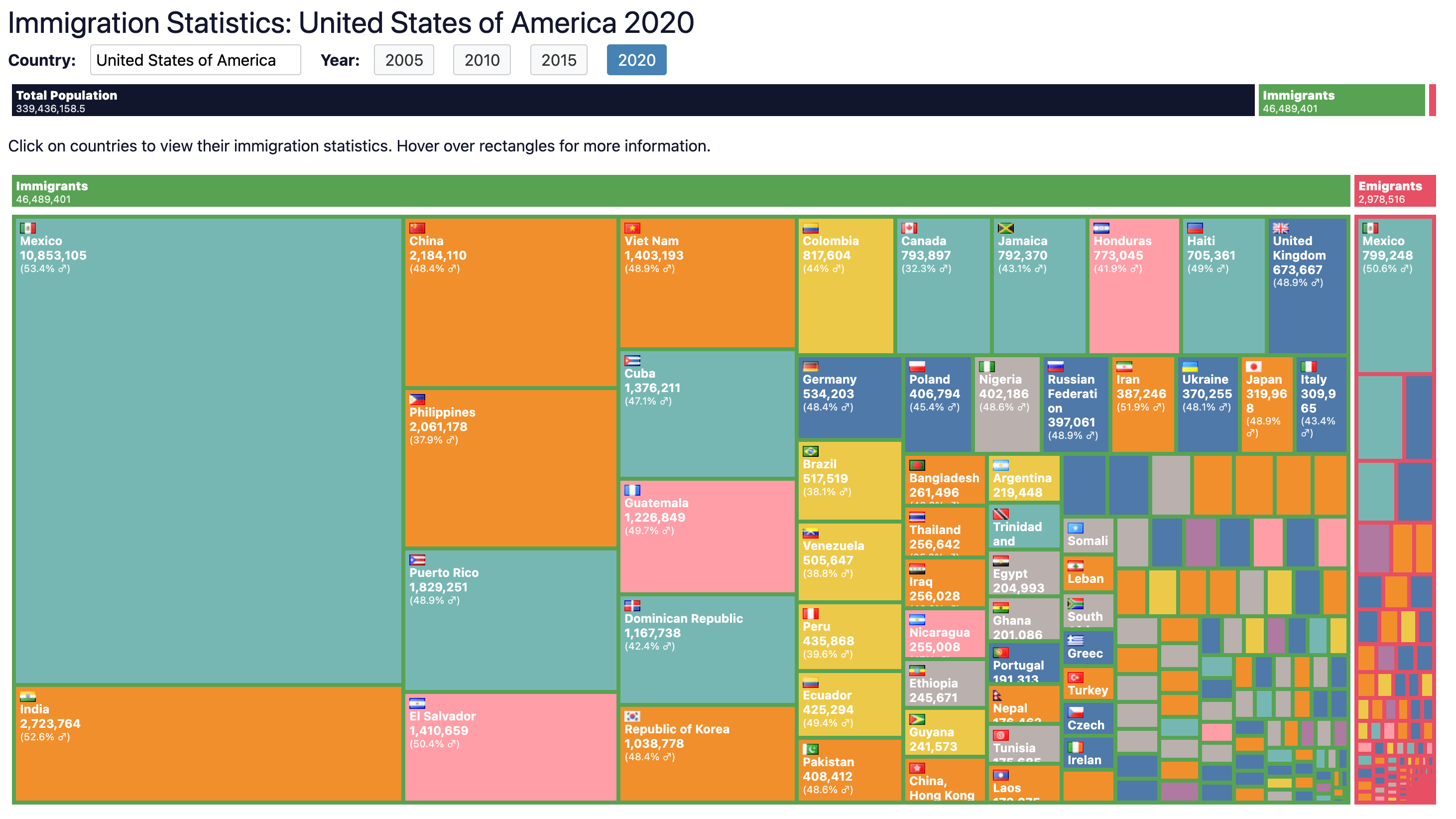
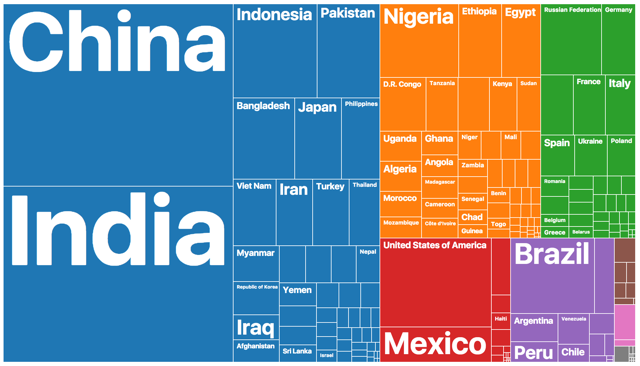
83,280,495 immigrants live in Europe.
| Ukraine | 8,703,691 |
| Russian Federation | 6,189,503 |
| Romania | 4,159,352 |
| Poland | 3,919,956 |
| Morocco | 3,272,343 |
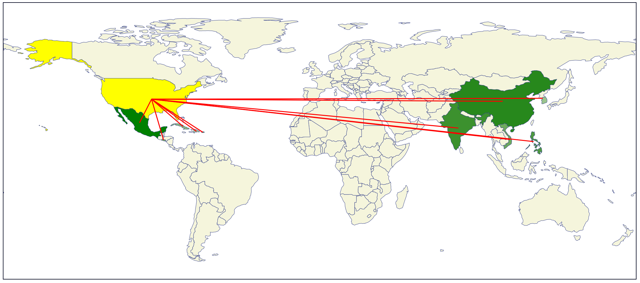
Where emigrants live (2024)
60,833,587 people born in Europe live in other countries.
| Germany | 8,559,326 |
| United States of America | 4,690,040 |
| Ukraine | 3,844,198 |
| United Kingdom | 3,682,751 |
| Russian Federation | 3,479,735 |
Frequently asked questions about Europe's population
What was the population of Europe in 2015?
In 2015, Europe's population was 744,237,035.
How old is the population of Europe?
Europe's median age is 41.4 years.
How many children and older people live in Europe?
In Europe, 15.8% of people are under 15 and 17.5% are 65 or older.
What shape is Europe's population pyramid, and what does it mean?
Europe has a constrictive pyramid: cohorts of children are smaller than those of their parents, reflecting low fertility and an ageing population.