Africa Population Pyramid 2015
Africa in 2015
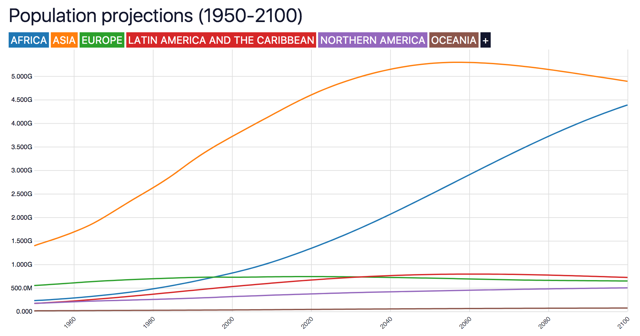
As of 2015, Africa counted 1,220,075,495 inhabitants. A decade earlier, in 2005, the population was 942,546,382; it has grown by 29.4% since.
The median age was 19.2 years, and for every 100 people of working age (15–64) there were 74.6 children under 15 and 5.9 people aged 65 or over. This is an expansive pyramid — each cohort of children is larger than the one above it, the signature of high birth rates and rapid growth.
Data source: United Nations World Population Prospects, 2024 revision (medium variant) — last updated July 2024.
The World Bank does not publish this indicator for regions or continents.
The World Bank does not publish this indicator for regions or continents.
27,007,173 immigrants live in Africa.
| South Sudan | 3,137,331 |
| Sudan | 2,494,313 |
| Burkina Faso | 2,033,940 |
| D.R. Congo | 1,804,509 |
| Zimbabwe | 1,308,132 |
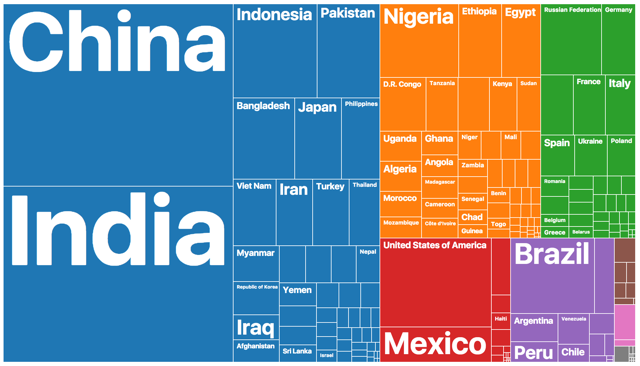
45,746,777 people born in Africa live in other countries.
| France | 4,428,182 |
| Côte d'Ivoire | 2,811,282 |
| Saudi Arabia | 2,622,804 |
| South Africa | 2,348,920 |
| Sudan | 2,338,949 |